
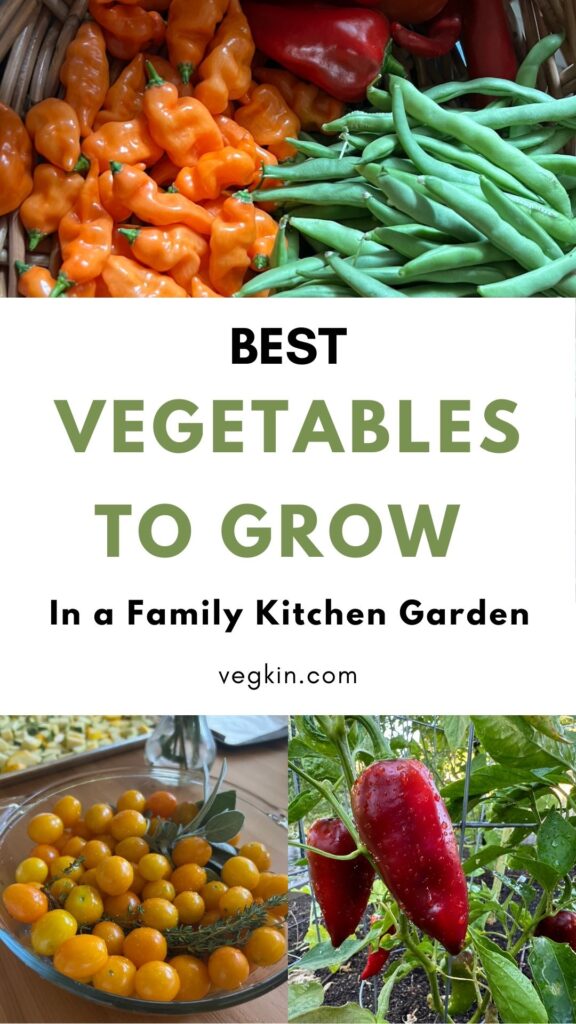
Learn all about the best vegetables to grow in a family kitchen garden. This list of veggies are perfect for moms who want to start growing some of their family’s food. Right in their own backyard.
So you’ve been thinking about starting a garden. Maybe it’s the weather warming up, or the cute little plants popping up outside every grocery and big box store.
Before you grab a bunch of baby plants (seedlings) to put in the ground, know that some things are definitely easier to grow than others. And they all need different conditions to grow well.
The last thing you want is to excitedly fill up your garden and then watch everything struggle but not know how to fix it.
I’ve been there. It’s no fun.
So let’s set you up for success instead, and talk all about the best and easiest veggies to grow in your family kitchen garden.
I go over my top picks, why they’re great for beginners, and even some growing and recipe tips along the way. Because isn’t the whole point to eat more good food?
Let’s dive right in with one you’ll probably see the most for sale.
Tomatoes
Tomatoes are a fantastic vegetable to grow in your family kitchen garden.
Whether you’re making hearty pasta sauces, adding cherry tomatoes to fresh summer salads, or getting a big juicy slicer for a burger hot off the grill- tomatoes always make me think of summertime.
To successfully grow tomatoes in your backyard garden you first need to know that there are two main types. Determinate and Indeterminate tomatoes.
These terms refer to how tall a tomato plant will get, and tell you how much space you’ll need to give each one in your garden, as well as what kind of support they need.
Determinate tomatoes– grow to a “determined” height. On average, they’ll get to be about 3-4 feet tall, depending on the variety. Usually these will be labelled as “bush” variety tomatoes.
Determinate tomatoes usually do need some sort of support to keep the fruit off the ground where bugs can get in them.
Pro tip: Skip the small cone shaped cages sold as “tomato cages” at most garden centers. They usually aren’t tall enough or strong enough to hold a healthy bush tomato plant (but they are perfect for a different plant, which I’ll talk about below). Basically if you can easily bend it with your bare hands without even trying, so can a tomato plant! Many of the stronger, taller trellises and DIY systems with t-posts or stakes work better.
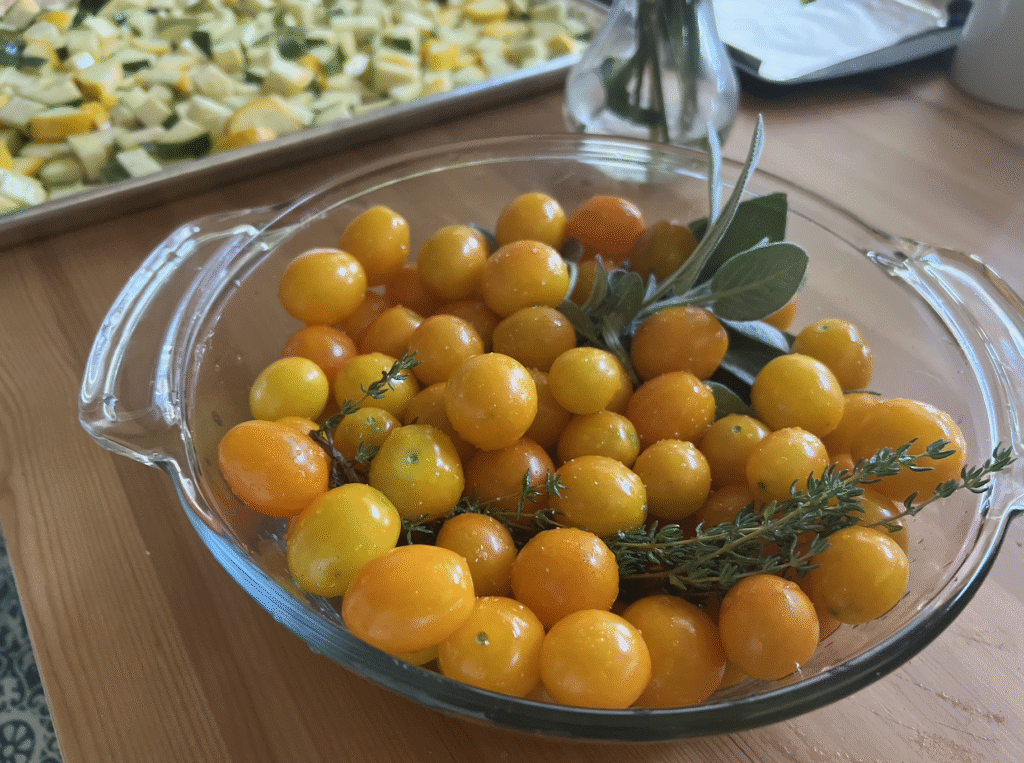
Examples of determinate tomatoes include Romas (great for making pasta sauce), and some cherry tomatoes like the Golden Nugget (a colorful addition to any salad).
Indeterminate tomatoes– grow to an “undetermined”, or indefinite height. With the right conditions and support, these tomato plants will just keep on going until something kills them (usually disease or frost).
Examples of indeterminate tomatoes perfect for your kitchen garden are pretty much any cherry tomato (like Super Sweet 100) or large slicer tomatoes (my current favorite is Hungarian Heart).
Peppers
Next up on the list for best vegetables to grow in your family kitchen garden are peppers.
These are another summertime staple that make any dish taste delicious.
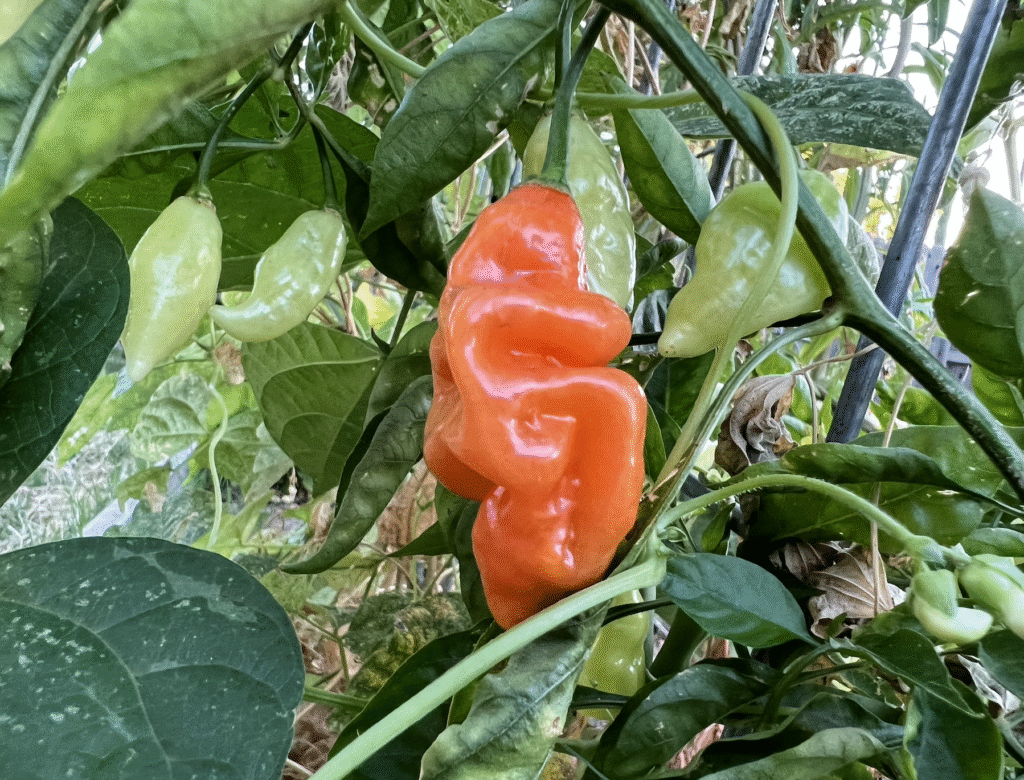
Hot Peppers– You can grow hot peppers, like jalapeños, poblanos, or habaneros for spicy salsas, hot sauces, or to just add a kick to a dish.
There are so many different flavor profiles with hot peppers that the possibilities are seemingly endless!
Pro tip: Some hot peppers are hot enough to burn, especially small children. They’re all rated by hotness on the Scoville Scale. Be sure to read up on any hot pepper varieties before buying them.
If you want to experiment with growing hot peppers in your kitchen garden, but also have little kids, try planting them all in one area, like the middle of your garden bed where they’re hard to reach.
For slightly older kids, a tag tied around the base of the plant works well.
If you’re interested in growing the super hot peppers, you could put them in their own pots in a different spot in your yard all together, so no garden snacking kids end up biting into them by mistake.
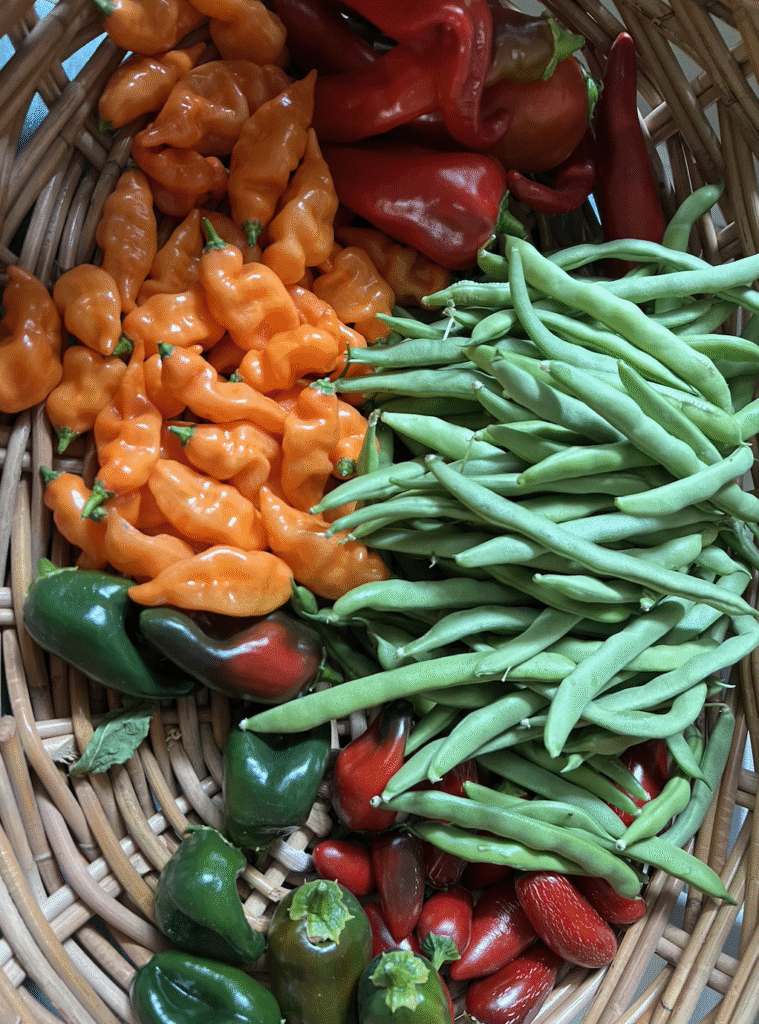
Sweet Peppers– My family loves sweet peppers! While we do grow a few of the milder hot peppers, the majority of what we grow are sweet.
Bell peppers that you get at the grocery store are the most popular sweet peppers, but they’re really just the beginning of the awesome flavors you can get.
Varieties like Ajvarski look more like a traditional Italian pepper and can be tastier than your traditional bell (especially when compared to one you get at the grocery store!)
There are also sweet varieties of peppers that have been modified from traditionally hot ones. Our favorite is one called “Habanada”. It has the same fruity flavor profile as a habanero, and- as you can probably guess from the name- none of the heat.
We grow these just so we can add a few to salads in the summertime and chili in the winter. They’re amazing!
Pro Tip: And remember those janky little tomato cages we were talking about earlier? Well small “tomato cages” are great for supporting pepper plants. Adding a cage to even a couple of your pepper plants will give them all the support they need to grow well.
Eggplant
I don’t personally like eggplant (it’s definitely the texture that’s a no for me), but my husband does so I grow them for him. I do, however, think the plants are beautiful.
Eggplant leaves have a really pretty shape and are soft and velvety to touch. They’re a great plant to add to the garden because kids love the feel of them!
Most of us are used to seeing one type of deep purple eggplant in the grocery store, but they actually come in all sorts of shapes, sizes and colors.
Growing varieties that look like white dragon eggs, or are striped pink is so much fun to experiment with, especially for little imaginations to explore.
Related Posts You Might Like:
- 8 No Fuss Ways to Enjoy Gardening While Pregnant
- 10 Ways to Love Gardening with a Baby
- 12 Simple Tips for Gardening with a Toddler
Cucumbers
Homegrown cucumbers are a fantastic early summer snack. They’re so refreshing to add to water (maybe with a little mint) or to eat as their own kind of salad.
And kids love them too! You can always cut them into fun, easy shapes like flowers to make them taste a little more magical.
Tip: if you live in a hot climate like I do, cucumbers can actually be pretty hard to grow. They get bitter and gross really fast as the weather heats up.
If this has been your experience too, try the Armenian cucumber. They’re technically a melon, but look and taste similar to a cucumber. And they don’t mind hot summers at all!
Beans
Beans are super beginner friendly plants to grow. There are two types: bush and pole beans. Both have varieties that you can grow and eat like string beans, or wait until they’re dry to harvest the beans themselves.
Bush bean plants grow to about a foot or so tall, and are mostly determinate. So they tend to flower and make all of their pods at once. You can still get more after that though, especially if you keep harvesting. You can get a few rounds off of them. But harvests will likely be a few weeks apart.
Pole beans are indeterminate, so they grow super tall. When you see beans growing on a teepee trellis or arch, those are indeterminate.
Once this type of bean gets going, you’ll likely be picking from them every couple of days, if not every day depending on how many plants you have.
I love growing both. The pole beans give you beautiful height interest in your garden, while bush beans are perfect for filling in any gaps in your garden. Both give you delicious fresh beans to add to any dinner.
Summer Squash and Winter Squash
When you first start gardening, you’ll probably hear of “summer squash” and “winter squash”. This can be a bit confusing, because all squash are actually grown in the spring/ summer time.
Summer squash, like zucchini, are typically eaten while the fruit is still small and tender. If you leave a zucchini on a plant for long enough it will get huge, not taste as good, and the outside will eventually get hard- just like a pumpkin.
Winter squash are the same, just intentionally left on the plant longer. In the case of things like butternut squash, pumpkins, and gourds, you want to wait until the fruit is completely mature and the outside shell is tough.
The name “winter squash” just means that those types of squash store well over the wintertime because they’re protected by a hard rind.
For a kitchen garden, smaller varieties of squash grow really well on trellises. You can grow sugar pie pumpkins (yay pumpkin pie!), butternut squash (or the adorable, delicious alternative- honeynut squash) or even the cute little pumpkins that are perfect to decorate your house in Fall (jack be littles and baby boos).
Related Posts:
Melons
When most people think of growing melons in their backyard, they think of long sprawling vines and huge fruit that weighs 20+ pounds.
Plants that big don’t really work for a raised bed kitchen garden. That is, if you want a lot of variety growing. One healthy watermelon vine would take over an entire 4×8 foot bed!
Some people try to squeeze in these plants anyway (…raises hand and looks away guiltily), but it usually doesn’t turn out well.
BUT, you don’t have to give up dreams of growing your own watermelon, cantaloupe, and other versions of this refreshing summertime snack.
Enter, the personal sized melon. You can find all sorts of tasty personal melon varieties that don’t need quite as much space.
The fruit of these smaller melons usually weigh a few pounds each, making them perfect for a kitchen garden trellis. This means you can grow them up instead of sprawled out, taking up even less space!
Plus, kids love eating fresh melons their size. They’re perfect to eat in one sitting, so you don’t have to worry about any going to waste.
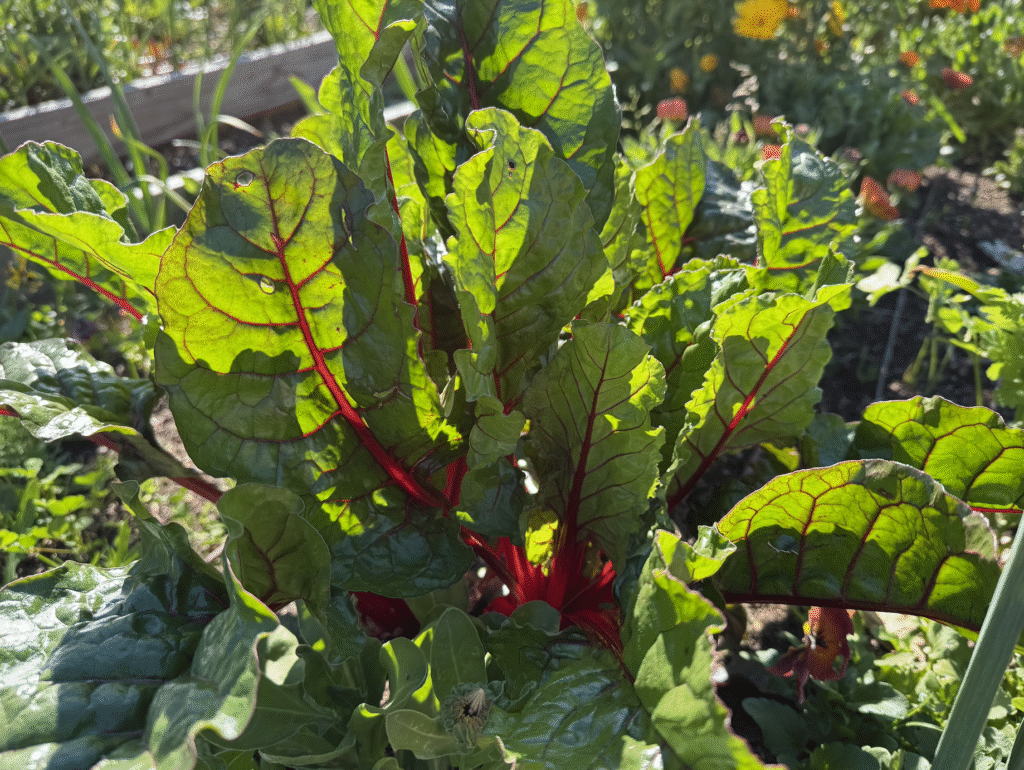
Chard
To round out our list of the best vegetables to grow in a summer kitchen garden, is chard. Most people don’t think about this one, but I think it’s an unsung hero of the summer garden.
Now, to be fair, a lot of people don’t really like the taste of chard. And I was one of them.
It’s definitely not something I just grab and snack on, but we’ve found ways to make it really tasty.
We’ll mix a bit in with a fruit smoothie, juice it, or with herbs for pesto. Even our toddler can’t tell it’s in there!
If you enjoy eating your greens, chard is a wonderful addition to the summer garden because it’s one of the few leaves that can handle the warm (or hot) weather.
Fun fact- I recently found out that chard is biannual in a lot of places, so you can actually eat from the same plant for two years in a row!
We put this to the test last year. In the summer months we used chard to make salads, smoothies, and sauted dishes. Then in the winter we added it to a bunch of different soups. All year eating from the exact same plant, and it’s still going strong in our garden!
Another great reason chard is one of the best vegetables to grow in a family kitchen garden is the color. As a member of the beet family (it’s actually called silverbeet in some countries), the stems come in vibrant yellow, orange, red, and white. I especially love how they look in the wintertime when most of what’s growing is different shades of green.
I started growing chard for the color first, then slowly learned to enjoy the taste as well. I’m a firm believer that growing things yourself makes them taste better.
Give it a try- you might find you like chard more than you thought!
Other Frequently Asked Questions from Moms Who Want to Garden:
What’s the difference between a kitchen garden and a vegetable garden?
While a kitchen garden and a vegetable garden have a lot of the same things, the main differences are:
- Size. Usually a kitchen garden is smaller than a vegetable garden
- Function. Kitchen gardens, because they’re smaller are more about eating a bit of fresh produce every day. A vegetable garden is often planted with growing enough food to store through Winter in mind
- Design. Kitchen gardens are usually more elaborate or polished and are designed like an outdoor extension of a house. Beauty matters just as much as function.
- Proximity. Because the idea of kitchen gardens is to harvest a bit for most daily meals, they tend to be closer to the house than vegetable gardens. Usually close to the kitchen or right outside the back door.
What to have in a kitchen garden?
Kitchen gardens are usually a mix of herbs, vegetables, and flowers that you can add to meals or use to decorate your table. While you can plant anything you like in a kitchen garden, the best herbs and veggies to have in your kitchen garden are things that you and your family like to eat that you can add daily to meals throughout the growing season.
What vegetables are best to grow in raised beds?
Most vegetables grown in a family kitchen garden grow well in a raised bed. While you can also grow all of these things in-ground, raised beds are great for:
- Having good soil. Raised beds allow you to provide nutrient rich, soft soil for your vegetables to thrive
- Keeping animals off of your veggies. Depending on the height of the bed, you can use raised beds to keep gophers and rabbits out of your garden, or use them as barriers for pets
- Ease to maintain. Raised beds are a great way to garden for people with injuries or accessibility needs
Final Thoughts on the best vegetables to grow in a family kitchen garden
I hope this list of veggies that are great for beginner gardeners gets you excited to get started. More than anything, I hope it gives you the confidence to know that you and your family can totally grow a beautiful, delicious garden full of food!
Let me know in the comments what you’re most excited to try! I can’t wait to hear from you.
Leave a Reply